Buying guidance
Original and compatible cartridges can both be sensible choices. Compare the complete cost, expected output and support behind the product rather than choosing from the label alone.
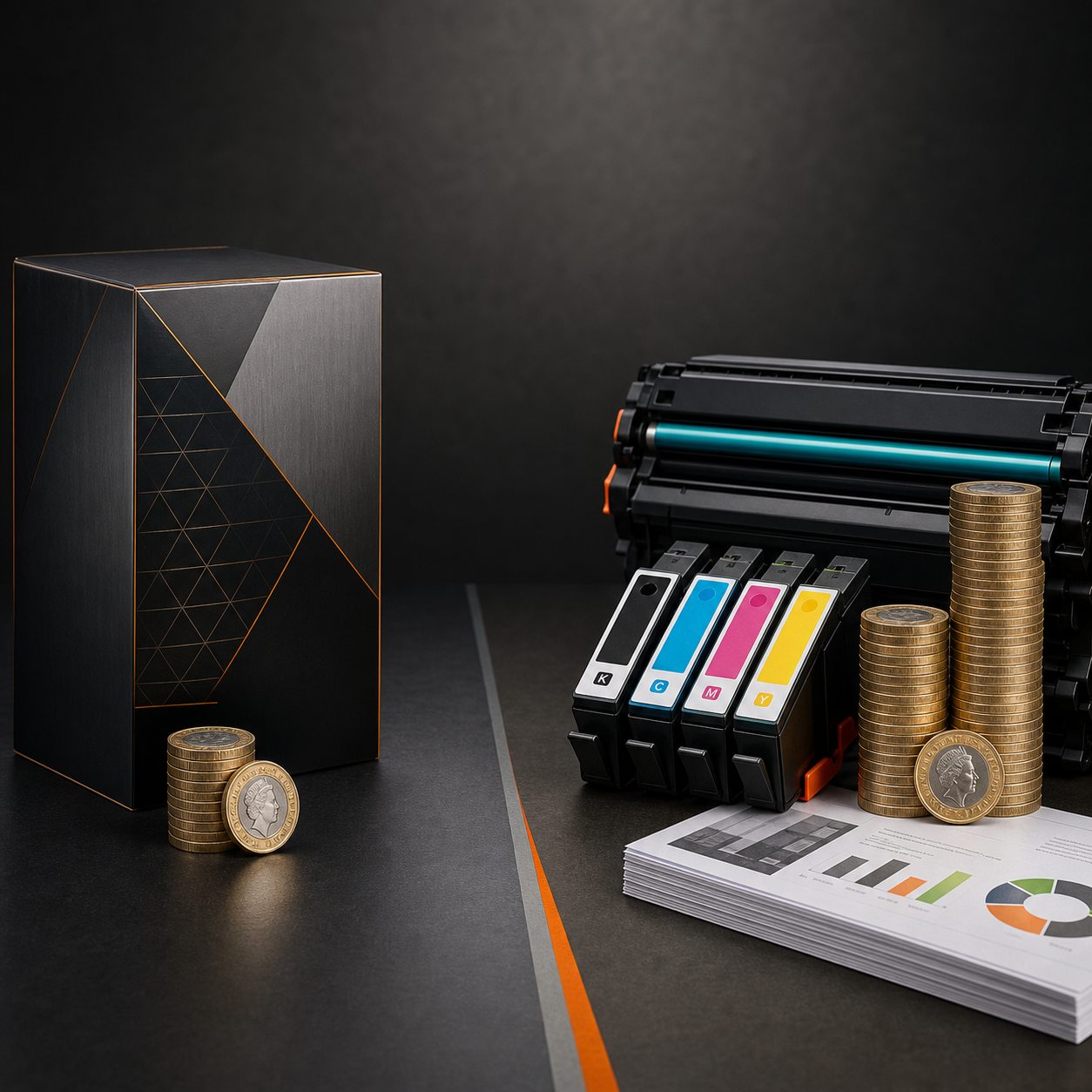
When a printer needs ink or toner, the choice is often presented as original versus compatible. An original cartridge is made or branded by the printer manufacturer, sometimes described as OEM. A compatible cartridge is produced by another manufacturer for use with a specified group of printers.
Neither label answers every buying question. The useful comparison includes price, page yield, printer fit, expected print quality, support and the importance of the documents being produced. Start by confirming the exact cartridge family, then compare like with like.
What you are comparing
Original cartridges
Original cartridges come from the printer brand and are designed around that manufacturer’s hardware, firmware and stated performance. Packaging, cartridge recognition and published yield information are usually easy to trace. They are often the straightforward choice where an organisation follows a manufacturer-led purchasing policy or where a specialist print result is especially important.
Compatible cartridges
Compatible cartridges are newly manufactured alternatives made for particular printer models. Quality and support can vary between suppliers, so the producer, specification and seller matter. A well-specified compatible can reduce the purchase cost for routine printing, but it still needs to match the exact printer and intended workload.
Compare price and yield together
The shelf price is visible, but cost per usable page gives a better comparison. Check whether both products are standard or high yield, and whether quoted yields use the same testing basis. A lower-priced cartridge is not automatically better value if its capacity is smaller or if the work requires a different quality level.
Published page yields are standardised comparison estimates, not promises for every user. Dense graphics, photographs, colour coverage, cleaning cycles and print settings can all change the number of pages obtained. For a workplace, compare the likely monthly volume and the disruption caused by frequent changes as well as the purchase price.
Compatibility is model-specific
A product described as compatible must still list the full printer model or cartridge family. Similar model names can use different chips, contacts or physical fittings. Firmware changes can also alter how a printer communicates with a cartridge, so buy from a source that clearly identifies the supported models and explains its resolution process if recognition fails.
Use the printer brands directory to begin with the manufacturer, then record the complete model and current cartridge code. Do not insert a cartridge that needs force, modify a casing, or ignore a mismatch warning simply because the product looks similar.
Set realistic print-quality expectations
Routine documents and internal printing
For invoices, drafts, correspondence, school resources and everyday office documents, a suitable compatible cartridge may meet the practical requirement at a lower initial price. Assess text sharpness, colour consistency and reliability against the work you actually produce.
Colour-critical and specialist output
Original supplies may be preferred for colour-managed artwork, repeatable photographic work, specialist media or an organisation’s controlled workflow. Printer settings, paper and maintenance also affect output, so a cartridge alone cannot correct every quality issue.
When comparing samples, use the same file, paper and print settings. A fair test avoids attributing a driver setting or blocked printhead to the cartridge. Keep a note of the cartridge code and installation date if repeatability matters.
Warranty questions need careful wording
A compatible cartridge does not automatically cancel every printer warranty, but it is also unwise to claim that it can never affect a warranty discussion. Terms vary by manufacturer, country, fault and support agreement. A manufacturer may assess whether a third-party supply caused the reported damage. Read the printer warranty and any managed-print contract, and retain purchase records.
If the machine is under a specialist service agreement, check that agreement before changing supply type. For an existing fault, record the error message and avoid repeated installation attempts that could cause damage.
Which option suits which use case?
Original cartridges suit customers who want the printer manufacturer’s supply path, need a specific controlled output, or must follow an internal policy. Compatible cartridges can suit cost-conscious routine printing when the product is properly matched and backed by a clear supplier process. Some customers use different approaches for different printers rather than applying one rule across every device.
For repeat purchasing, review the result over several normal print jobs instead of judging only the first page. Record recognition issues, usable output and staff time spent changing supplies. This gives a local evidence base for the next order and helps a business compare total value rather than headline price.
For a comparison based on your actual printer and workload, use the quote form. Include model numbers, usual monthly volume and whether you need black, colour, standard or high yield. You can also contact Cartridge Care Rossendale on 01706 491066, Monday to Friday, 9-5.
Frequently asked questions
Are compatible cartridges refilled originals?
Not necessarily. Compatible usually means a newly manufactured third-party product. Remanufactured and refilled supplies are different descriptions, so check the exact product information.
Will a compatible cartridge print the same number of pages?
Compare the stated yield for the specific products. Actual output varies with coverage, settings, maintenance and use, regardless of the label.
Should every business choose the same cartridge type?
No. Consider the printer, document purpose, volume, support policy and budget. Different devices or teams may reasonably need different choices.
Need a like-for-like cartridge comparison?
Tell us the printer model, current cartridge code and typical use. We can explain suitable original and compatible options without overstating either.